Select Alberta Industrial Access That Fits the Freight
Rail-served and highway-focused sites are not interchangeable, and neither is automatically the better investment. The right choice depends on how goods move now, how an operation may grow, and where its customers, suppliers and terminals sit within the wider network.
From our long-term owner and investor perspective, industrial land value is shaped by far more than acreage and current zoning. Transportation corridors, servicing capacity, municipal planning direction and room to accommodate future users can all influence a property’s staying power. Calgary’s connections to major east-west and north-south highway routes, rail networks and western Canadian markets make freight access a central consideration in industrial property development in Alberta.
Start with Freight Patterns, Not Site Labels
Before choosing between rail and highway access, we recommend defining the freight profile. A bulk commodity operation has very different needs from a regional distribution centre handling time-sensitive consumer goods. Broad labels such as “well located” or “close to rail” do not answer the operating question on their own.
A useful early review should consider:
- Shipment volumes and whether loads move steadily or in peaks
- Product type, handling needs and required dwell time
- Inbound and outbound freight flows
- Delivery frequency, fleet mix and last-mile requirements
- Distance to suppliers, customers, intermodal terminals and end markets
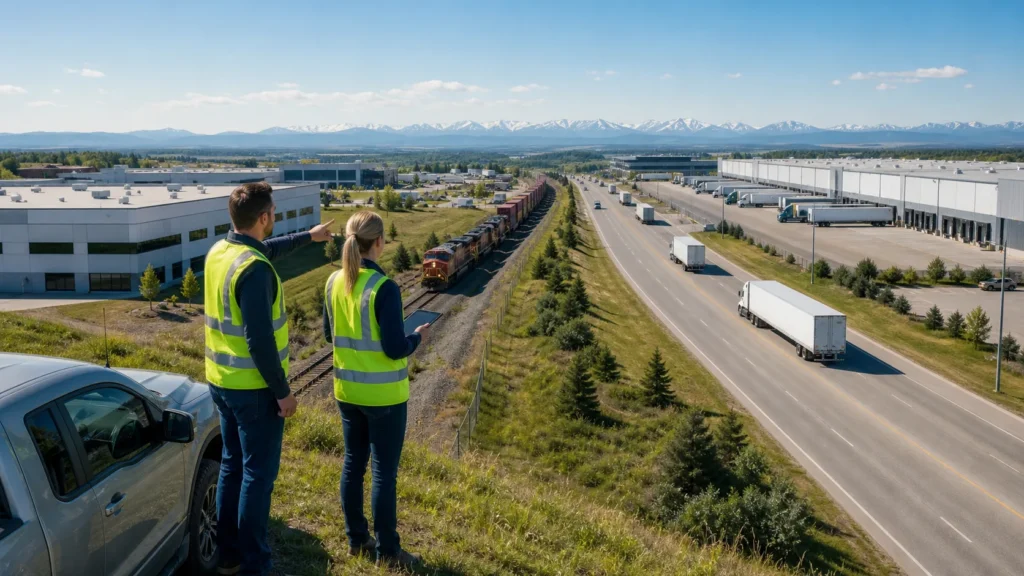
Rail and highway access often work together. Even a properly rail-served site needs dependable roads for employees, local deliveries, container drayage and truck-to-rail transfers. Similarly, a highway-focused warehouse may depend on a rail intermodal terminal for longer-haul container traffic while trucks handle regional distribution.
For industrial property development in Alberta, that means looking carefully at access to Highway 2, Highway 1, Stoney Trail, Deerfoot Trail and other freight corridors, as well as nearby rail lines and intermodal facilities. Rather than relying on general impressions of demand, we encourage decision-makers to review current Alberta Transportation traffic information, Statistics Canada freight and trade data, and rail carrier network details relevant to the intended use.
Rail Service Pays When Operations Can Use It
Rail adjacency is not the same as rail service. A parcel beside a rail corridor may carry visibility and strategic appeal, but that does not mean railcars can be brought onto the site. Functional rail service may require a private siding, loading tracks, appropriate site geometry, switching arrangements, carrier agreements and enough operating volume to support the required infrastructure.
In our experience, rail can be particularly relevant where large quantities of goods move over long distances. Potential users may include operations handling agricultural products, building materials, energy-related supplies, heavy manufacturing inputs, vehicles, containers or high-volume distribution. Rail may reduce dependence on long-haul trucking and add capacity to a supply chain, but only where the service pattern fits the operation.
The financial and operational review should account for more than line-haul movement. Handling requirements, railcar availability, service schedules and transfers between rail and truck can materially affect the outcome. A rail spur that looks attractive on a site plan can become underused if the operator lacks the right volumes, product flow or internal handling capacity.
Development also carries added layers of review. Rail-served industrial development may involve:
- Railway review processes and operating agreements
- Easements, crossings and setback requirements
- Drainage, grading, noise and vibration considerations
- Environmental work and municipal approvals
- Site circulation that safely separates rail and truck movements
Facilities near Conrich and major CPKC operations illustrate how rail infrastructure can influence surrounding land use in the Calgary region. Still, proximity to those systems should not be mistaken for immediate rail readiness on every nearby parcel.
Highway Access Prevails When Time Drives Value
For many industrial users, truck access is the main operating requirement. Warehousing, e-commerce fulfilment, food distribution, construction supply, energy services and regional logistics all depend on frequent movements, flexible delivery windows and predictable access to customers. In those cases, a direct and dependable highway connection may carry more value than a rail spur.
Highway proximity alone is not enough. A site beside a major route can still underperform if trucks face difficult turning movements, limited access points, congestion, bridge restrictions, weight limits or poor links to municipal arterials. Large distribution facilities also need adequate loading depth, trailer storage, circulation room and queuing space that works during busy periods and throughout Alberta winters.
Calgary-area industrial land benefits from connections through Highway 2, Highway 1, Stoney Trail and Deerfoot Trail, which link employment areas to Alberta markets, western Canadian trade routes and the United States. When we assess highway-focused opportunities, we look beyond the map to practical matters such as approved interchange work, access permits, municipal road plans and expected buildout in nearby employment areas.
Protect Future Value Through Infrastructure Due Diligence
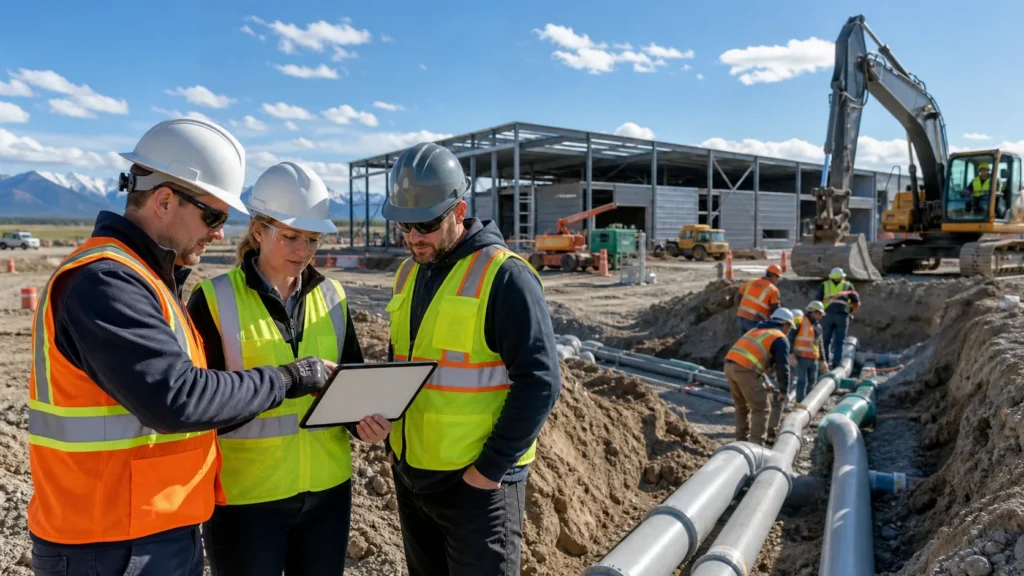
Transportation is only one piece of site readiness. A rail-served or highway-focused property can lose momentum if water, wastewater, stormwater, power, fibre or road capacity cannot support the intended industrial scale. Off-site improvement requirements can affect timing, carrying costs, tenant fit and the ability to phase a development.
Larger industrial transactions often require input from land-use planners, civil engineers, transportation consultants, environmental professionals, rail specialists, legal counsel, surveyors and municipal representatives. Their work helps identify road widening needs, utility commitments, easements, approval conditions and rail-related constraints before they become expensive surprises.
Late September is a practical time to review these matters. Many organizations are setting capital budgets, reviewing land pipelines and preparing for the next construction season. If road, servicing or rail improvements need to move ahead before winter, or need to be included in the following year’s programme, early review can preserve options.
Build a Corridor Strategy Before Committing Capital
The strongest industrial decisions come from a corridor strategy, not a single-access lens. We encourage owners and investors to test how freight economics, tenant demand, servicing capacity, municipal plans and infrastructure timing fit together over the long term.
Rail service can create durable value when operations can genuinely use it at sufficient scale. Highway access can be decisive when speed, flexibility and truck-based distribution drive the business model. In many major industrial transactions, the best opportunity is a site that connects efficiently to both systems while preserving flexibility for future development.
Position Your Site for Long-Term Industrial Value
At Highfield Investment Group, we help owners and investors assess how transportation access, servicing, land use and future market demand shape major site decisions. Our approach to industrial property development in Alberta considers the infrastructure and entitlement work needed to support durable industrial value. If you are evaluating a significant industrial opportunity, contact us to discuss the property’s development potential and strategic fit.