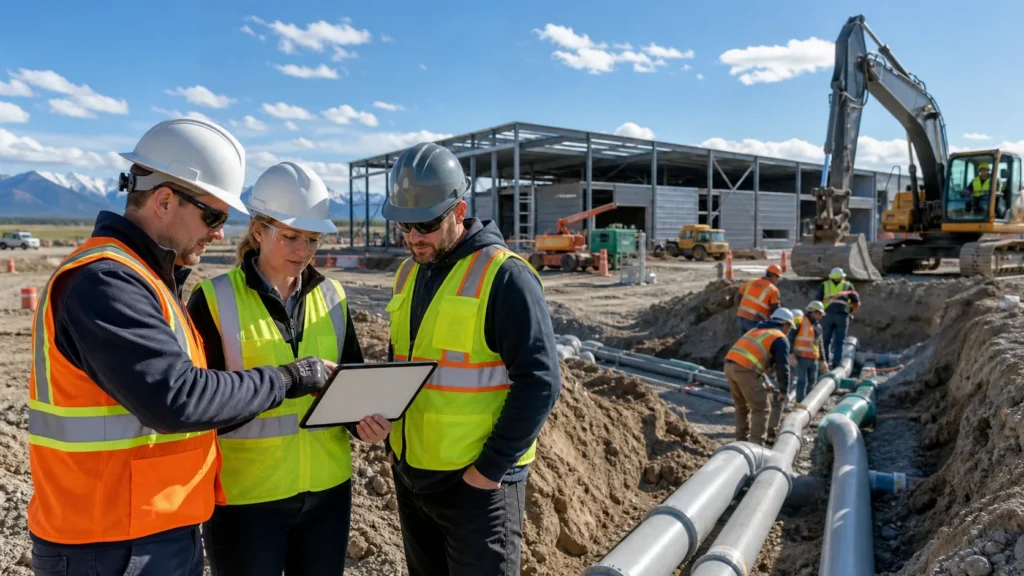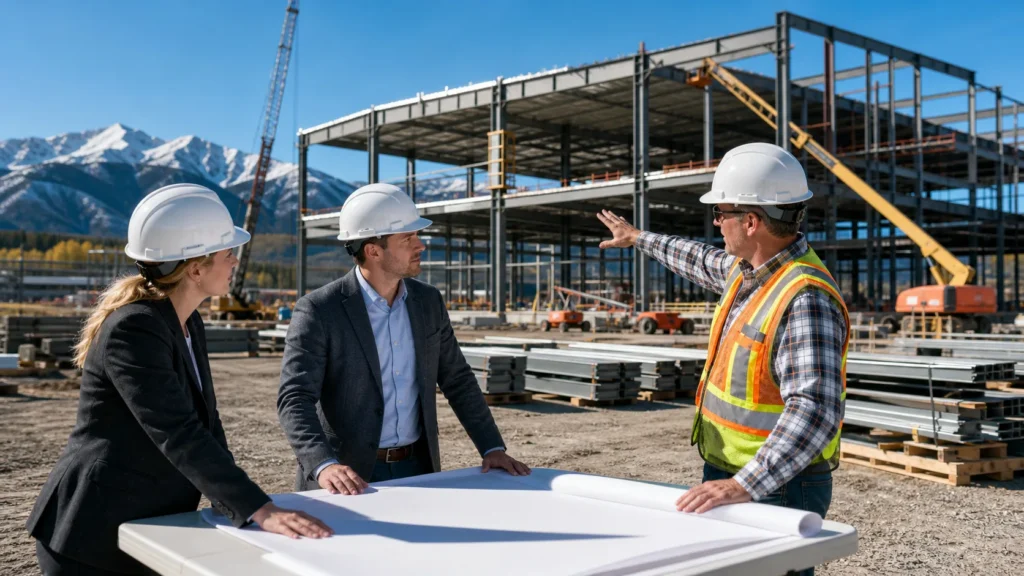
Choose the Right Delivery Model Before Winter Planning
The delivery model you choose can shape your industrial project long before work begins on site. For Calgary warehouse, manufacturing, distribution, and expansion projects, design-build and tendering affect schedule planning, budget control, risk, and the long-term usefulness of the finished property.
As fall planning begins, we recommend making this decision early. Winter weather, site servicing, transportation access, permits, labour availability, and material lead times can all influence the path forward. When we discuss industrial construction services in Calgary, we help owners look beyond the building itself and consider how the project will move from an early idea to a working facility.
Design-Build Creates Early Alignment and Flexibility
With design-build, one team takes responsibility for both design and construction. Architects, engineers, contractors, and owners work together from the beginning, rather than passing completed drawings to a builder later in the process.
That early teamwork can uncover concerns before they become site problems. We often see this approach work well when a facility requires specialized mechanical systems, loading areas, heavy equipment foundations, clear-span structures, or room for future growth. The construction team can review whether the design is practical to build while there is still time to adjust it.
Design-build can also support a more coordinated schedule. Design, permitting, procurement, and construction planning may move forward at the same time. For projects heading into fall and winter, that can allow teams to identify long-lead materials and equipment early, helping protect the next construction season.
During the design stage, owners can weigh choices that affect both daily operations and long-term value, including:
- Building materials and durability
- Site layout, truck access, and loading flow
- Energy efficiency and building systems
- Construction phasing around ongoing operations
- Future expansion capacity
Because the design remains flexible, value engineering can happen before plans are locked in. Instead of reacting to surprises after a bid is received, you can consider how decisions affect performance, maintenance, and the life of the property.
Tendering Supports Competitive Pricing and Defined Scope
Traditional tendering follows a different path. The owner first works with consultants to complete the design, drawings, and specifications. Contractors are then invited to submit bids based on the same defined scope.
This process can give you a straightforward comparison when the work is clearly described. Detailed documents help set expectations for building components, finishes, site work, utility connections, and performance requirements. We find that tendering can be a practical fit for repeatable industrial building types, well-planned renovations, or projects where the owner has already made key design choices.
Still, completed drawings do not remove every unknown. Market conditions can change between early estimates and construction. Material availability, labour conditions, site discoveries, substitutions, addenda, and unresolved details can all affect the final project outcome.
Tendering also requires enough time before spring demand begins. A project needs time for design completion, approvals, bid preparation, contractor review, negotiations, and award. When comparing industrial construction services in Calgary, we encourage owners to consider more than the initial bid. A contractor’s industrial experience, proposed schedule, safety practices, team capacity, and ability to manage winter conditions all matter.
Compare Risk, Speed, and Owner Involvement
Neither delivery model is automatically the right answer for every project. The better choice depends on how complete your scope is, how quickly you need to move, how complex the site may be, and how involved you want to be in early decisions.
Design-build often provides earlier budget guidance because the team is involved while the design takes shape. Tendering can create competitive bid comparisons once the design is complete. In either case, strong planning and clear communication do more for long-term value than choosing a model based on one factor alone.
Here is a simple way we compare the two approaches:
- Design-build often allows design and construction planning to overlap, while tendering usually requires completed drawings before bids are requested.
- Design-build places more coordination responsibility with one integrated team, while tendering may leave the owner managing separate design and construction relationships.
- Design-build calls for early owner input on operational goals and priorities, while tendering gives owners more control over the completed design before selecting a contractor.
- Tendering can suit stable, well-defined scopes, while design-build can suit projects that need flexibility as planning develops.
Risk allocation also differs. Under design-build, the integrated team generally takes greater responsibility for coordinating design and construction. With tendering, owners may hold more responsibility for design completeness, consultant coordination, and changes made after the construction contract is awarded.
Make a Confident Choice for Your Industrial Project
A clear project brief is the best starting point, whichever model you choose. We suggest outlining site requirements, facility operations, target occupancy timing, budget range, approval needs, and future development plans before choosing a delivery method. Design-build may be a strong fit for complex or time-sensitive projects, while tendering may work well when drawings are complete and the scope is stable.
Highfield Investment Group can help you define a practical path from early planning through construction delivery. Explore our industrial construction services in Calgary to see how we support industrial projects with focused coordination and informed decision-making. For a conversation about your site, scope, or timeline, contact us through our website.