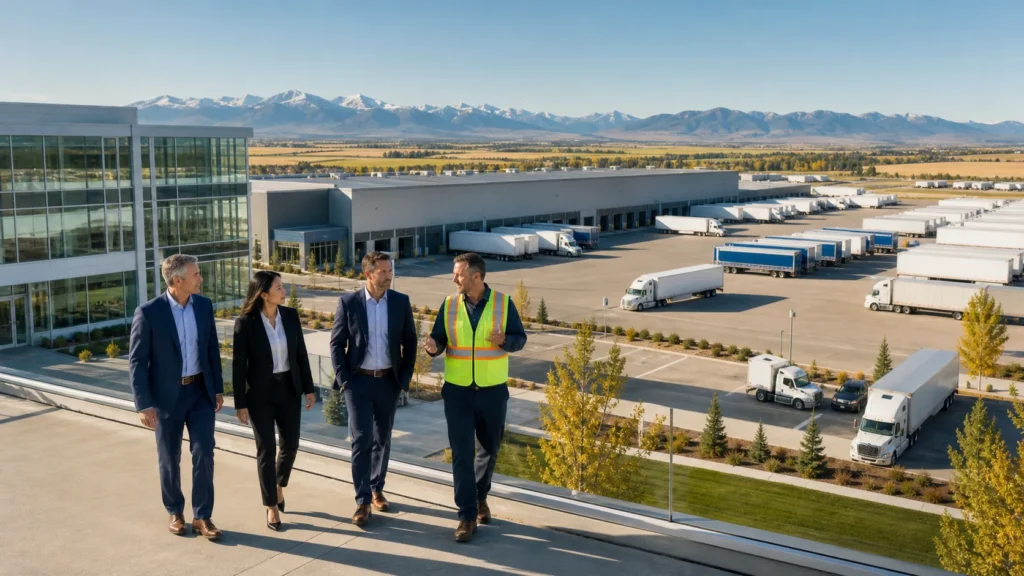
Headline: How Industrial Tenants Structure Commercial Property Leases in Alberta
Meta Title: Industrial Lease Structures for Alberta Operations
Meta Description: Explore how industrial tenants approach commercial property leasing in Alberta, including lease terms, renewals, build-outs, operating costs and risk allocation
Industrial Lease Terms That Support Long-Term Growth
Commercial property leasing in Alberta is more than choosing a building and agreeing on a term. For industrial tenants, a lease is a long-term decision about capital, operating capacity, supply chains and room to grow. At Highfield Investment Group, we view the strongest agreements as ones that connect a tenant’s day-to-day needs with the long-term potential of the land and property.
That perspective matters in Alberta, where transportation corridors, energy activity, interprovincial trade and regional growth can shape industrial demand. Market reports from firms such as our partners, CBRE, can help frame current vacancy, asking-rent and absorption conditions, but the quoted rate is only one part of the decision.
Late October is often a practical time to review lease commitments. Many occupiers are finalizing budgets, forecasting inventory needs and assessing whether their sites will be ready for the next construction season. Winter can limit some site work, so a lease that clearly addresses expansion, improvements and timing can preserve options before plans become more difficult to execute.
For warehousing, distribution, logistics and production users, lease terms should support:
- Predictable access to major transportation routes
- Reliable loading, storage and operating capacity
- Flexibility for future equipment, staff or inventory growth
- Clear responsibility for repairs, taxes and building systems
Net Leases and the Real Cost of Occupancy
Net leases are common in larger industrial transactions because they separate base rent from other property expenses. Depending on the agreement, those expenses may include operating costs, property taxes, insurance and utilities. This structure can give both parties a clearer view of the obligations attached to the premises, but only when the wording is specific.
In a multi-tenant warehouse, a tenant may share expenses for common-area maintenance, snow removal, security, lighting and property management. The way those amounts are allocated can affect total occupancy costs over time. We recommend that tenants and owners review the operating-cost definition closely, including what may be recovered, what is excluded and how annual reconciliations will be handled.
Capital expenditures deserve particular attention. A lease may treat a routine repair differently from a major replacement or building upgrade. Management fees, utility allocation, parking-area repairs and shared services should not be left to assumptions.
Responsibility for repairs also changes by property type. A standard warehouse bay may have a different allocation than a single-tenant distribution centre, heavy-industrial facility or purpose-built operation. The lease should clearly address:
- Roof, structure and exterior paving
- HVAC, electrical service and fire-suppression systems
- Loading doors, docks and specialized equipment
- Environmental controls and site infrastructure
- Yard areas, drainage and snow-clearing responsibilities
Term Length, Rent Reviews and Future Rights
Lease length often reflects how much a tenant must invest in the site. A logistics operator in conventional warehouse space may be able to work within a shorter term. A manufacturer installing specialized equipment, cold storage, high-voltage power, rail service or extensive yard improvements will usually need more certainty.
Rent-review clauses should match that level of commitment. Fixed annual increases can offer predictability. Indexed adjustments may follow a defined measure. Market reviews can reflect changing conditions, while stepped rent may align with a planned improvement program or phased occupancy. None of these approaches is automatically best. The right structure depends on the building, the length of the lease, market conditions and the amount of capital the owner is contributing.
Renewal, expansion and first-offer rights can be equally important. A growing industrial tenant may need access to adjoining space, additional yard area or land for a future building. From an ownership perspective, those rights can affect future leasing plans, redevelopment choices and underlying land value. We often see the greatest need for careful drafting near transportation routes and developing employment areas, where the property’s future potential may be broader than its current use.
Site Function Shapes Commercial Property Leasing in Alberta
A lower quoted rent will not make up for a site that cannot move goods efficiently, handle trailer traffic or support the intended operation. In commercial property leasing in Alberta, the building and the land must work together. Clear height, loading configuration, trailer parking, yard storage, power capacity and circulation can carry as much weight as the lease economics.
Balzc and High Plains’ connection to Highway 2, Stoney Trail, Deerfoot Trail, Canadian Pacific Kansas City rail networks and Calgary International Airport can influence distribution planning. Elsewhere in Alberta, access to Highway 16, Highway 43, resource corridors and intermodal infrastructure may shape a tenant’s location choice. We encourage parties to look beyond the property line and consider how trucks, staff, suppliers and customers will actually reach the site.
Operational due diligence should also include permitted use and municipal approvals. A proposed use may require zoning review, development permits, transportation studies, signage approval, environmental review or building-code upgrades. For a complex facility, lawyers, planners, engineers, environmental consultants and municipal representatives may need to be involved before occupancy can begin.
Credit, Security and End-of-Term Obligations
For a significant industrial lease, the tenant’s financial strength is part of the property decision. Owners may review financial statements, operating history, corporate guarantees, parent-company support, letters of credit or security deposits. That review becomes particularly important when a lease includes specialized improvements, a long term or infrastructure that may have limited value to another user.
Assignment, subleasing and change-of-control provisions also deserve close attention. Tenants need reasonable flexibility if a supply chain changes, a division is sold or additional capacity is no longer needed. Owners, however, need to protect credit quality, property standards and future leasing value. Consent procedures, recapture rights and potential profit-sharing terms can vary widely by transaction.
Industrial leases should also be direct about restoration and environmental obligations. Energy services, manufacturing, vehicle fleets, outdoor storage and regulated materials can create responsibilities that outlast regular occupancy. Clear provisions should address hazardous materials, contamination reporting, remediation, equipment removal and the condition in which the site must be returned.
Plan Lease Commitments Around the Next Growth Cycle
The best industrial lease is not simply the one that works on the possession date. It is the one that aligns operating needs with site capacity, infrastructure access, municipal requirements and realistic growth plans. Before committing, we recommend looking at total occupancy obligations, building adaptability, expansion capacity, landlord capital requirements and end-of-term responsibilities together.
As year-end planning approaches, it is wise to review upcoming expiries, anticipated capital projects, inventory changes and site constraints. Starting those discussions early gives tenants and owners more time to assess legal, real estate, engineering and planning requirements before market conditions or construction schedules narrow the available options.
Strengthen Your Leasing Position
Highfield Investment Group helps owners and industrial tenants discover commercial property leasing opportunities in Alberta with attention to lease structure, site requirements and long-term value. Our team brings an investment-focused perspective to transactions involving warehousing, distribution, logistics and industrial facilities. To discuss an upcoming requirement or portfolio consideration, contact us.